What is Answer Engine Optimization (AEO) and How Does It Differ from Traditional SEO?
An experienced AEO services agency specializes in Answer Engine Optimization (AEO), a strategy focused on positioning your content to appear in AI-generated responses from platforms such as ChatGPT, Microsoft Copilot, and Perplexity AI. Instead of optimizing for traditional search engine result pages, an AEO services agency targets conversational AI systems and voice assistants that deliver direct answers to user questions.
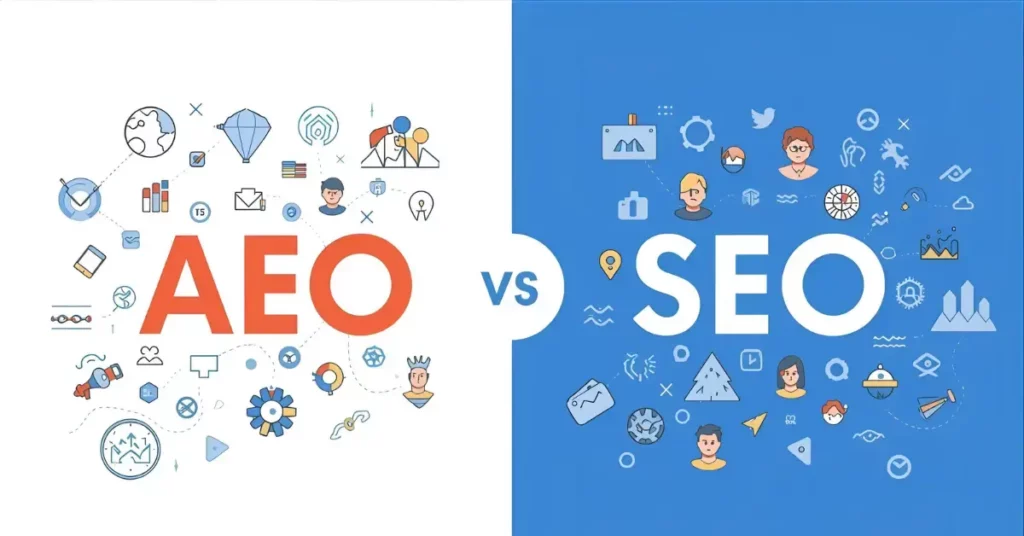
Traditional SEO focuses on improving SERP rankings through keyword targeting, backlink building, and metadata optimization, with the primary goal of achieving visibility on Google’s first page. In contrast, an AEO services agency takes a different approach—structuring content so AI assistants recognize your brand as a trusted source and reference it when users ask questions in a natural, conversational way.
Key Differences Between AEO and Traditional SEO
The content format requirements diverge significantly between these approaches:
- Traditional SEO: Long-form articles, keyword density, internal linking structures
- AEO: Concise answers, FAQ formats, schema markup, structured data optimized for AI parsing
Success metrics reveal another fundamental distinction. Traditional SEO tracks rankings, organic traffic, and click-through rates. AEO measures brand mentions within AI responses, citation frequency across answer engines, and placement in AI overviews.
The Importance of Schema Markup in AEO
Schema markup becomes critical in AEO rather than optional. AI models rely on structured data to extract accurate information quickly. Featured snippets and People Also Ask sections serve as training grounds for AI responses, making them priority targets.
The Shift in User Behavior
The shift reflects changing user behavior. People increasingly ask questions naturally to AI assistants instead of typing fragmented keywords into search boxes. Is an AEO agency the missing link in your SEO strategy? That depends on whether your content speaks the language of conversational AI or remains optimized solely for traditional search algorithms.
Why Has AEO Gained Importance in Today’s Digital Marketing Landscape?
AEO has become essential because AI-powered platforms now command massive user bases that rival traditional search engines. ChatGPT alone attracts over 400 million weekly users, while Microsoft Copilot and other AI assistants continue expanding their reach across desktop and mobile devices.
The numbers tell a compelling story about where digital traffic is heading. Industry analysts predict that 25% of organic traffic will migrate from traditional search engines to AI chatbots by 2026. This represents a fundamental shift in how people access information online, creating new opportunities for brands that adapt early.
The Scale of AI Usage Growth
AI platforms have achieved adoption rates that took traditional search engines years to reach:
- OpenAI’s ChatGPT reached 100 million users faster than any consumer application in history
- Microsoft Copilot integrates directly into Windows, Office, and Edge browser, reaching enterprise and consumer markets simultaneously
- Perplexity AI and similar answer engines attract users seeking direct, synthesized responses rather than lists of links
These platforms don’t just supplement traditional search—they’re becoming primary information sources for specific user segments, particularly younger demographics comfortable with conversational interfaces.
Voice Search Trends Reshape Query Patterns
Voice-activated searches now account for a growing portion of total search volume. Users speaking to Siri, Alexa, Google Assistant, or AI chatbots phrase queries differently than typed searches. They ask complete questions: “What’s the best treatment for lower back pain?” rather than typing “lower back pain treatment.”
This behavioral shift demands content structured to answer natural language questions directly. AI answer engines excel at parsing these conversational queries and extracting relevant information from content optimized for this format.
AI Chatbots Traffic Shift Creates New Competition
The predicted traffic migration to AI chatbots introduces a new competitive dimension. Brands that previously competed for the top three SERP positions now face competition for mentions within AI-generated responses. A single AI answer might cite three to five sources, creating a different type of visibility race.
Users increasingly trust AI platforms to synthesize information rather than clicking through multiple search results. When ChatGPT or Copilot provides a comprehensive answer with citations, many users consider their search complete. Brands absent from these
How Do AEO Agencies Enhance a Brand’s Visibility Across Emerging Search Platforms?
AEO agencies use specialized services to help brands appear prominently in AI-generated responses and conversational search results. These agencies create content specifically designed for AI language models, focusing on providing clear and structured information that answer engines can easily understand and reference. The content created for AI models is different from traditional web copy as it prioritizes direct answers, uses clear hierarchical structures, and incorporates natural language patterns that match conversational queries.
1. Technical SEO enhancements
Technical SEO improvements are the foundation of AEO agency services. By implementing schema markup, AEO agencies enable AI systems to better understand the context of their content, increasing the chances of being cited in AI responses. They use structured data to mark up entities, FAQs, how-to guides, and local business information, making the content machine-readable across various AI platforms.
FAQ optimization
AEO agencies optimize frequently asked questions (FAQs) by transforming common customer inquiries into formats that AI assistants recognize as authoritative answers. This positions brands as primary sources of information.
2. Backlink management
Backlink management takes on new importance within AEO strategies. Instead of solely focusing on acquiring links for domain authority, AEO agencies actively seek out backlinks from sources that AI models rely on when training or retrieving information. This includes authoritative industry publications, academic sources, and verified databases that language models trust.
Digital PR outreach campaigns
Through digital PR outreach campaigns, AEO agencies secure mentions and citations in high-quality content that gets indexed and referenced by AI systems.
3. Local listing optimization
Local listing optimization ensures that brands appear in location-based AI responses. AEO agencies standardize business information across directories, optimize Google Business Profiles, and structure location data using schema markup.
4. Competitor analysis
Competitor analysis within AEO helps identify which brands dominate AI-generated answers in specific niches. Agencies also identify gaps where competitors lack visibility and exploit these opportunities through targeted content strategies.
These combined services create multiple pathways for brand visibility:
- Voice search results: Structured content and schema markup help brands become the spoken answer on smart speakers and voice assistants
- AI chatbot citations: Authoritative backlinks and well-formatted content increase mentions in ChatGPT, Copilot, and Perplexity AI responses

How Does an AEO Agency Complement Traditional SEO Efforts?
AEO agencies fill the gaps left by traditional SEO by addressing conversational queries, voice searches, and AI-generated responses that don’t follow conventional keyword patterns. While traditional SEO focuses on ranking for specific search terms, AEO optimizes for natural language questions users ask AI assistants like “What’s the best CRM for small businesses?” or “How do I reduce my tax liability?”
SEO and AEO integration creates a dual-channel approach where each strategy strengthens the other. Traditional SEO builds the foundation through authoritative backlinks, technical site health, and keyword-optimized content that search engines can crawl and index. AEO leverages this foundation by restructuring existing content into formats AI models prefer—concise answers, structured data, and FAQ sections that language models can extract and cite.
The synergy becomes clear when examining traffic sources. SEO drives visitors who click through from Google’s search results pages, while AEO captures users who receive direct answers from ChatGPT, Copilot, or Perplexity without ever visiting a SERP. A law firm might rank #1 for “personal injury lawyer Chicago” through SEO, but without AEO, they miss potential clients asking AI assistants “Who are the top-rated personal injury attorneys in Chicago?”
The Strategic Advantage of Multi-Platform Optimization
Brands implementing both strategies achieve online visibility maximization across the entire digital ecosystem. Consider these complementary benefits:
- Search engine traffic from traditional SEO maintains steady visitor flow through organic rankings
- AI citation placement through AEO captures users who bypass search engines entirely
- Voice search optimization addresses the growing segment of hands-free queries on smart speakers and mobile devices
- Featured snippet dominance serves both Google’s SERP features and AI training data sources
A SaaS company optimizing only for traditional search might dominate page one rankings but remain invisible when prospects ask AI tools for software recommendations. The same company working with an AEO agency ensures their product appears in AI-generated comparison lists, buying guides, and direct recommendations—capturing decision-makers at different stages of their research journey.
Content That Works Across Both Channels
The content formats that succeed in both SEO and AEO include:
- Concise Answers: Directly addressing common questions related to your industry or offerings.
- Structured Data: Implementing schema markup to help search engines understand the context of your content better.
- FAQ Sections: Creating dedicated sections on your website that answer frequently asked questions about your products or services.
By aligning your content strategy with these formats, you increase the chances of ranking higher in search results while also being featured in AI-generated responses.
What Challenges Might Brands Face When Partnering with an AEO Agency?
Implementation Challenges
Implementation challenges arise as soon as brands start their journey into AEO (AI-Optimized SEO). The industry currently lacks standardized measurement tools, making it hard to measure success as accurately as traditional SEO metrics. Unlike tracking keyword rankings or organic traffic in Google Analytics, keeping tabs on how often your brand appears in ChatGPT responses or Perplexity AI citations requires specialized platforms that are still developing in the market.
Tracking Limitations
Tracking limitations are one of the biggest hurdles in adopting AEO. Regular analytics dashboards can’t capture when AI engines reference your content or how often your brand gets cited in conversational responses. Specialized tools like OmniSEO™ have come up to address this issue, but they add another layer of complexity and cost to marketing technology stacks.
The lack of real-time data makes this challenge even worse. While SEO professionals can monitor daily ranking changes and traffic patterns, AEO performance often needs manual checks across multiple AI platforms. Each answer engine works with different algorithms and data sources, meaning your content might do well in one system while being ignored in another.
Internal Support Hurdles
Internal support hurdles often derail AEO initiatives before they can gain momentum. Finance teams question the return on investment when traditional SEO already takes up a large portion of the budget. Marketing leaders find it hard to justify allocating more resources without concrete proof that the strategy works, creating a catch-22 situation where brands can’t show value without first investing in the strategy.
Stakeholders who are used to familiar SEO metrics may resist shifting resources toward an approach that measures success differently. The request for budget to optimize content for AI citations instead of Google rankings can face skepticism from executives who built their understanding of digital marketing around traditional search methods.
Results Timelines
Results timelines vary greatly depending on your existing SEO foundation. Brands with strong domain authority, robust backlink profiles, and well-structured content may see AI citations within 4-6 weeks. Those starting from weaker positions face a longer runway of 3-6 months before meaningful visibility appears in answer engines.
This extended timeline tests organizational patience. Marketing teams feel pressure to show quick wins, yet AEO results may take time to materialize.
Which Industries Can Benefit Most from Engaging an AEO Agency?
Competitive industries where buyers conduct extensive research before making decisions see the highest returns from AEO strategies. Sectors like healthcare SEO, legal marketing, finance, and SaaS B2B technology face intense competition for visibility, making AI-powered answer engines a critical battleground for capturing qualified leads.
Healthcare and Medical Services
Healthcare providers compete for patient attention in an environment where trust and accuracy determine success. When potential patients ask AI assistants about symptoms, treatment options, or local specialists, appearing in those responses builds credibility before the first appointment. Medical practices, dental offices, and specialized clinics benefit from AEO’s ability to position their expertise within conversational AI platforms that increasingly serve as the first point of research for health-related queries.
Legal Services and Law Firms
Legal marketing demands visibility at the exact moment potential clients seek answers about their specific situations. Law firms practicing personal injury, family law, or business litigation need their expertise cited when AI engines respond to questions like “What should I do after a car accident?” or “How does divorce mediation work?” The structured, authoritative content required for AEO aligns perfectly with the trust-building essential to legal client acquisition.
Financial Services and Fintech
Banks, investment firms, insurance providers, and fintech startups operate in highly regulated spaces where accurate information delivery matters. Financial decision-makers increasingly turn to AI assistants for complex questions about mortgages, retirement planning, or business loans. Companies that optimize for these conversational queries position themselves as authoritative sources before prospects even visit traditional search results.
SaaS and B2B Technology Companies
SaaS B2B technology firms face lengthy sales cycles where buyers research extensively across multiple touchpoints. When procurement teams or technical decision-makers ask AI platforms about software comparisons, integration capabilities, or implementation best practices, appearing in those responses shortens the consideration phase. B2B tech companies with complex products benefit from AEO’s focus on clear, structured answers that address specific buyer questions throughout the purchase journey.
Multi-Location Franchises
Franchise businesses with dozens or hundreds of locations gain compound advantages from AEO strategies. When users ask location-specific questions like “Who does HVAC repair near me?” or “Where’s the nearest coffee shop?”, appearing prominently in those AI-generated responses drives foot traffic to individual franchise units while reinforcing brand consistency across all outlets.
How Can Brands Determine If an AEO Agency Is the Missing Link in Their SEO Strategy?
Brands can identify whether they need an AEO agency by conducting a thorough audit of their current digital presence against AI-driven search trends. This assessment reveals gaps between traditional SEO performance and the evolving landscape of conversational AI platforms.
Is Your Current SEO Strategy Keeping Pace with Digital Marketing Evolution?
Traditional SEO metrics like keyword rankings and organic traffic tell only part of the story. Brands should examine whether their content appears in AI-generated responses from platforms like ChatGPT, Perplexity AI, or Microsoft Copilot. Testing brand-related queries across multiple AI engines provides immediate insight into visibility gaps.
Key evaluation questions include:
- Do AI assistants mention your brand when users ask industry-specific questions?
- Are competitors appearing in AI responses while your brand remains absent?
- Has organic traffic plateaued despite strong traditional SERP rankings?
Does Your Content Format Match Conversational AI Requirements?
Content optimized for traditional search engines often fails to meet AI answer engine standards. AEO requires structured, concise responses that AI models can easily parse and cite. Brands should review whether their content includes FAQ sections, schema markup, and direct answers to common questions.
Voice search optimization presents another critical consideration. Users asking Alexa or Siri questions expect immediate, conversational answers rather than lists of website links. Content that works well for typed queries may not translate effectively to voice-activated searches.
What Does Competitor Analysis Reveal About Missed Opportunities?
Assessing SEO gaps becomes clearer when examining competitor presence in AI answer engines. Brands should systematically query industry-relevant questions across AI platforms and document which competitors receive citations. This competitive intelligence reveals whether rivals have already invested in AEO strategies.
Strategic investment decisions depend on understanding the competitive landscape. If competitors dominate AI-generated responses while your brand remains invisible, the gap will likely widen as more users adopt conversational AI tools. The shift of 25% of organic traffic to AI chatbots by 2026 makes early adoption increasingly valuable.
Related : Top 5 Skills to Look for in an Expert Umbraco developer Sydney